Proactive emotional self-defense, made practical for your people. Direct, warm, culturally aware, and never fluffy.
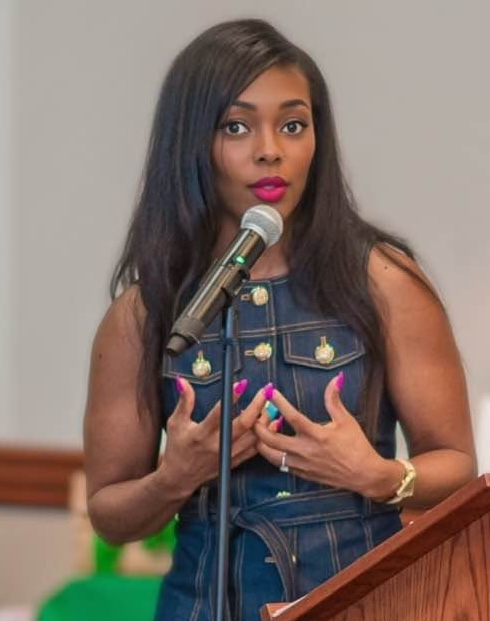
Licensed Psychotherapist · Counselor Educator · Author · Speaker · Dallas, Texas
Dr. Nichelle Chandler is a Dallas-based licensed psychotherapist, counselor educator, author and speaker who helps people break free from toxic relationships and the lingering impact of trauma. As creator of the F.U.C.K.E.M. framework, she blends clinical expertise with no-nonsense, culturally grounded wisdom — especially for Black women who are tired of shrinking themselves to keep the peace.
Across more than twenty years in counseling and community mental health, schools, substance-use treatment, private practice, teaching and clinical leadership, Dr. Chandler watched brilliant, capable women dim their light to accommodate toxic people. She wrote F.U.C.K.E.M. to reframe “self-help” as emotional self-defense: a practical, repeatable system of six protective principles for defending your mental health and reclaiming your power.
The clinical version of the framework, Proactive Emotional Self-Defense (PESD), is in press at a peer-reviewed counseling journal. Every topic can be delivered under that professional name, or as the F.U.C.K.E.M. framework for general and public audiences.
Full credentials and education · More about Dr. Nichelle · About the book
Each talk can be delivered as a keynote, a half-day workshop, or a full training — tailored to your audience.
An introduction to the framework: what it means to move from reacting to relational harm to preventing it, and how the model equips people before the crisis, not after.
How to spot manipulation, guilt and boundary erosion before they cost months of peace — and why capable people miss the signs.
Why prevention is a practised skill, not a personality trait. Building the reflexes that hold up when a difficult dynamic is already in motion.
Moving upstream from resilience and recovery to earlier intervention — framed for clinicians, advocates and helping professionals.
The recurring patterns that show up across relationships and settings, and a shared language for naming them without blame.
You can’t control people, but you can control access. A practical model for boundaries that hold without a fight.
Naming the quieter forms of harm — coercion, contempt, chronic undermining — and the signals that tend to precede them.
A candid, culturally responsive look at the pressures that teach women to override what they see — and the skills that reverse it.
Why prevention has to account for culture, community and context — and how to make these tools land for the audience in the room.
45–60 minutes. Energizing, story-driven and immediately useful for conferences and events.
Half or full day. Interactive practice with the six principles: Focus on Yourself, Uphold Your Truth, Create Your Boundaries, Keep Your Peace, Elevate Your Environment, Move Your Body.
Multi-session programmes for teams, organizations and community groups.
Practical, same-day takeaways — not just a good talk.
A shared language for naming manipulation, coercion and boundary erosion before they escalate.
A repeatable model for controlling access — usable under pressure, without a fight.
Nervous-system tools that keep a difficult person from hijacking focus, a team, or a day.
The shift from reacting to relational harm to intervening earlier, grounded in trauma-informed practice.
Tell me about your audience, your dates and the format you have in mind, and I’ll follow up with availability and options.
Prefer email? Write to [email protected] or call (469) 939-3644.